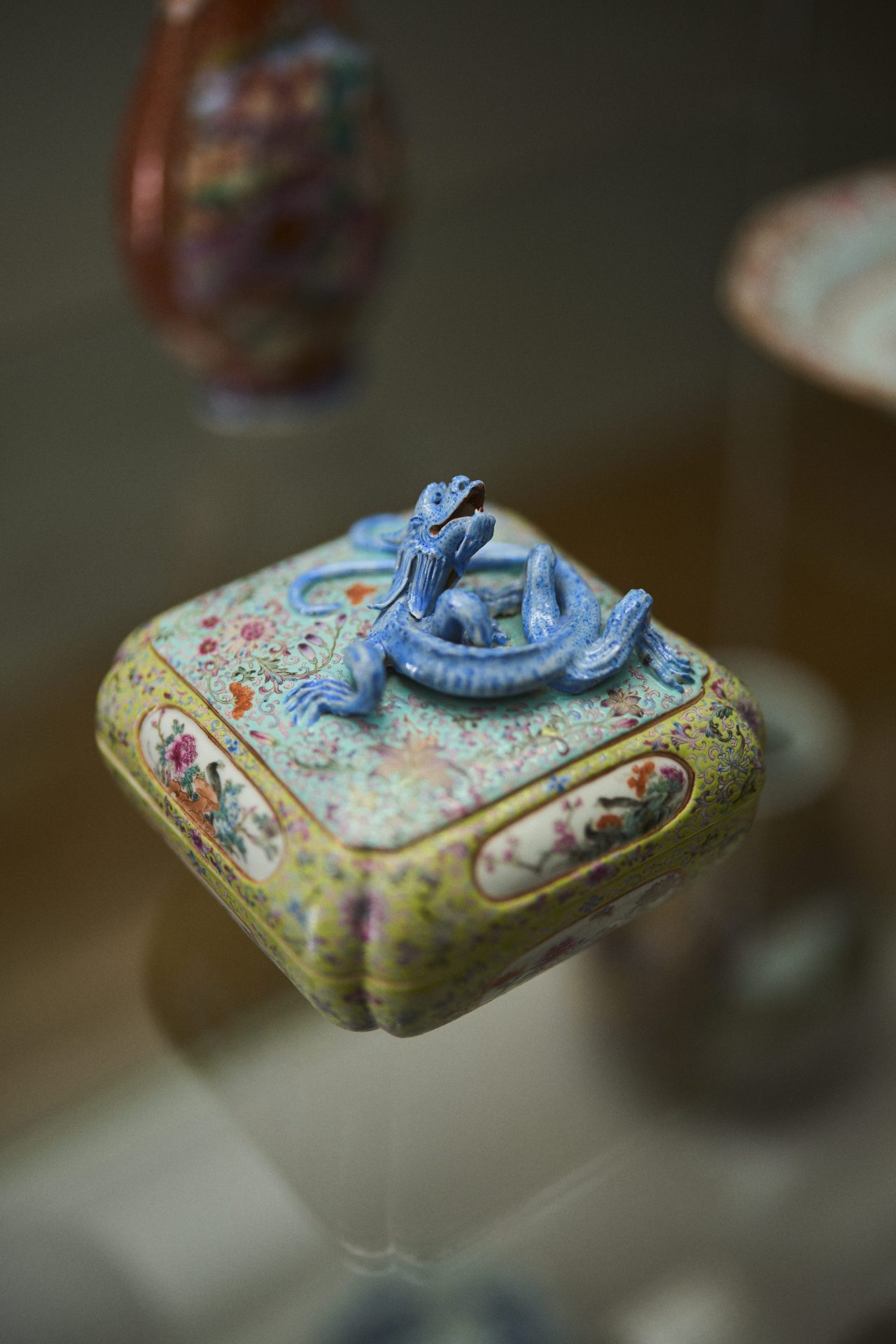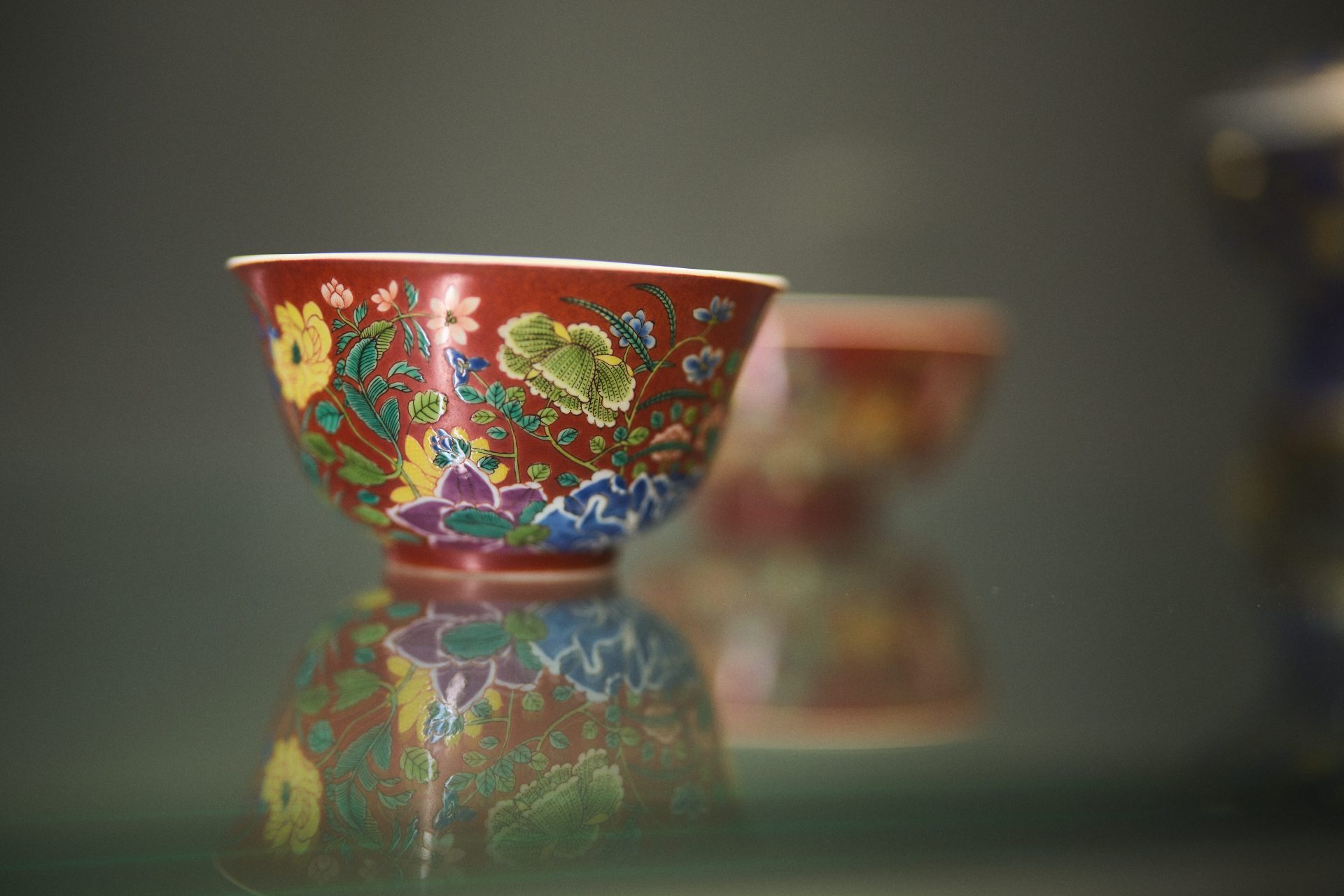
Seltmann Collection
The Qing Dynasty (1644–1911) witnessed the pinnacle of Chinese porcelain art. Under emperors Kang-xi (1661–1722), Yongzheng (1722–1735) and Qianlong (1735–1796), ceramic production in Jingdezhen reached an unprecedented level of perfection. The new fencai enamels enabled complex, intensely col-ored decors; the clear blue-and-white and perfected famille rose pieces conquered Europe. In the 17th and 18th centuries, a veritable “China mania” developed – Chinese porcelain became both a coveted luxury item and a status symbol. Under the later emperors Jiaqing, Daoguang and Guangxu, however, the erstwhile splendor went into decline.
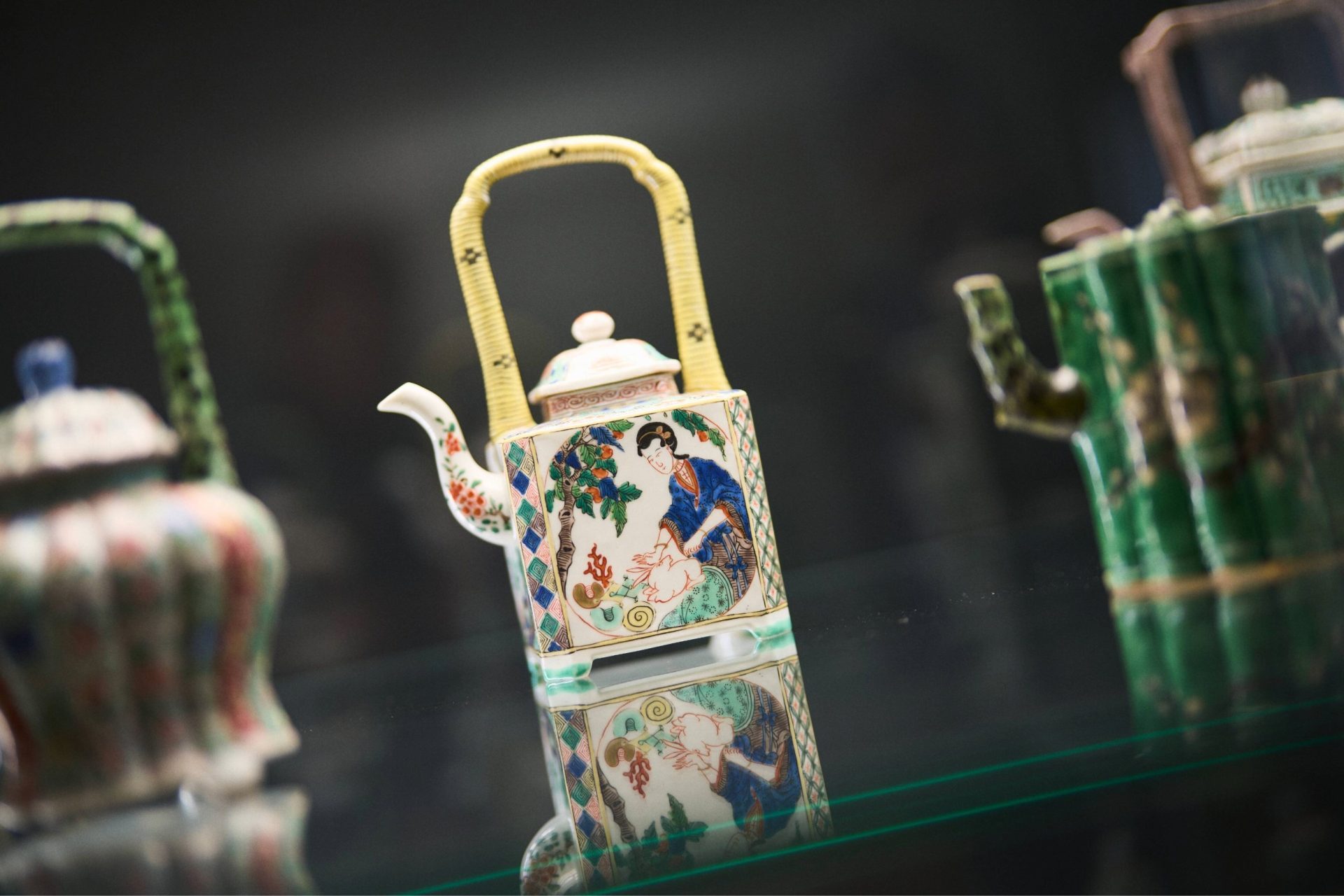
Over the course of two decades, Weiden porcelain manufacturer Dr. h.c. Wilhelm Seltmann (1895–1967) assembled a remarkable collection of Chinese porcelain. He was primarily interested in exotic items, in richly decorated vessels – an echo of that earlier “China mania.” In 1994, on the occasion of her 90th birthday, his widow Maria Seltmann (1903–2005) arranged the donation of the collection to the museum. The collection stands out for its open-minded approach: Alongside outstanding pieces from the 17th and 18th centuries, it includes numerous works from the 19th and 20th centuries – an era still largely neglected by the scholars.
In 2025, the collection of over 100 objects was newly arranged and presented.